What to Do When Your Toddler Is Overstimulated

Dr. Juliana Lainez, OTD, OTR/L, is a pediatric occupational therapist with fourteen years of experience in early childhood, specializing in sensory differences, developmental delays and disabilities, and parent training.
Julianan Lainez has been providing OT consultation to Izzi Early Education staff and families as an independent contractor since 2023. Over those years she has led several all-staff trainings for us and helped us deepen our understanding of children's diverse sensory and developmental needs, and give us practical ways to meet those needs.
We sat down with Juliana to talk about what overstimulation is, why it matters, and how parents can help their children.
Let's start with the basics. What does "overstimulated" actually mean?
Overstimulation in children is when there is too much noise, activity, information, or emotions happening at once, and their brain has a hard time processing it all. When explaining overstimulation to adults, I ask them to imagine ants crawling up your body, or restless leg syndrome. Now imagine that not only on your body but in your mind as well. That non-stop feeling you can't see because it's happening underneath the skin and you can’t verbally explain. That's the feeling going on inside a child who is overstimulated.

“Overstimulation in children is when there is too much noise, activity, information, or emotions happening at once, and their brain has a hard time processing it all”
How do you know if a toddler is overstimulated? How is it different from a tantrum, tiredness, or hunger?
Start with the three basics: Are they hungry? Are they tired? Do they need a diaper change or the bathroom? If all three have been addressed and they're still having a hard time, that's your signal.
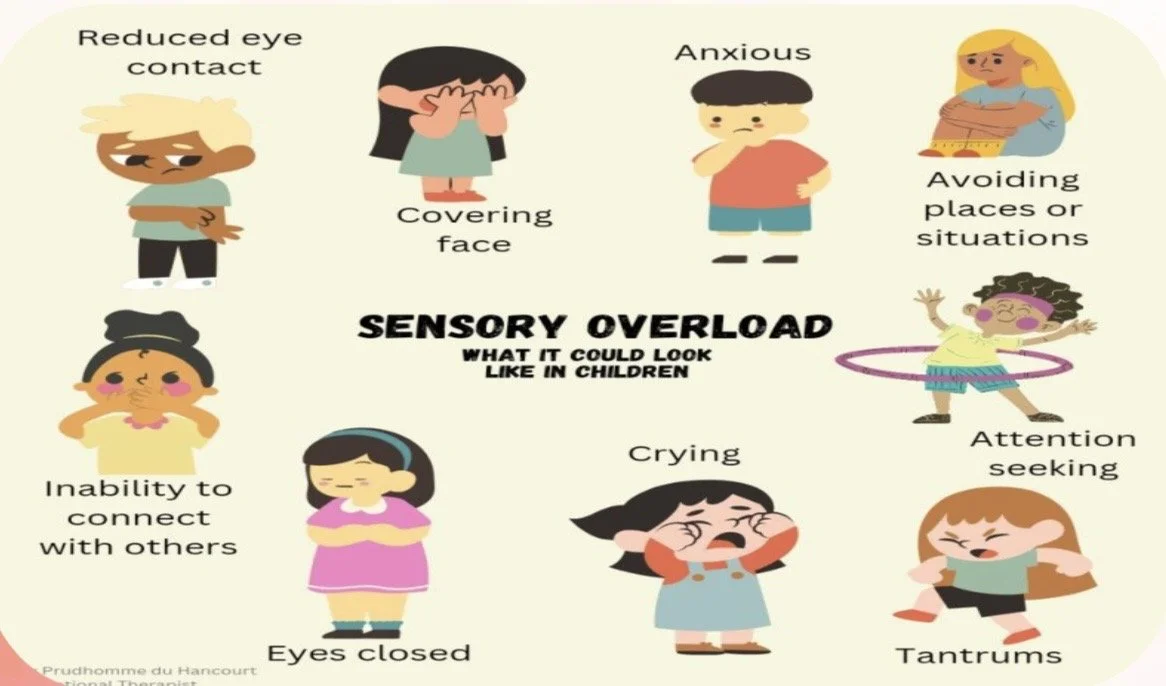
What you'll see is a child who has very little emotional regulation Irritable. It feels like a roller coaster. Or you may also see a child who is constantly in motion and never appears to run out of energy.
Walk me through what you'd do in the first 60 seconds.
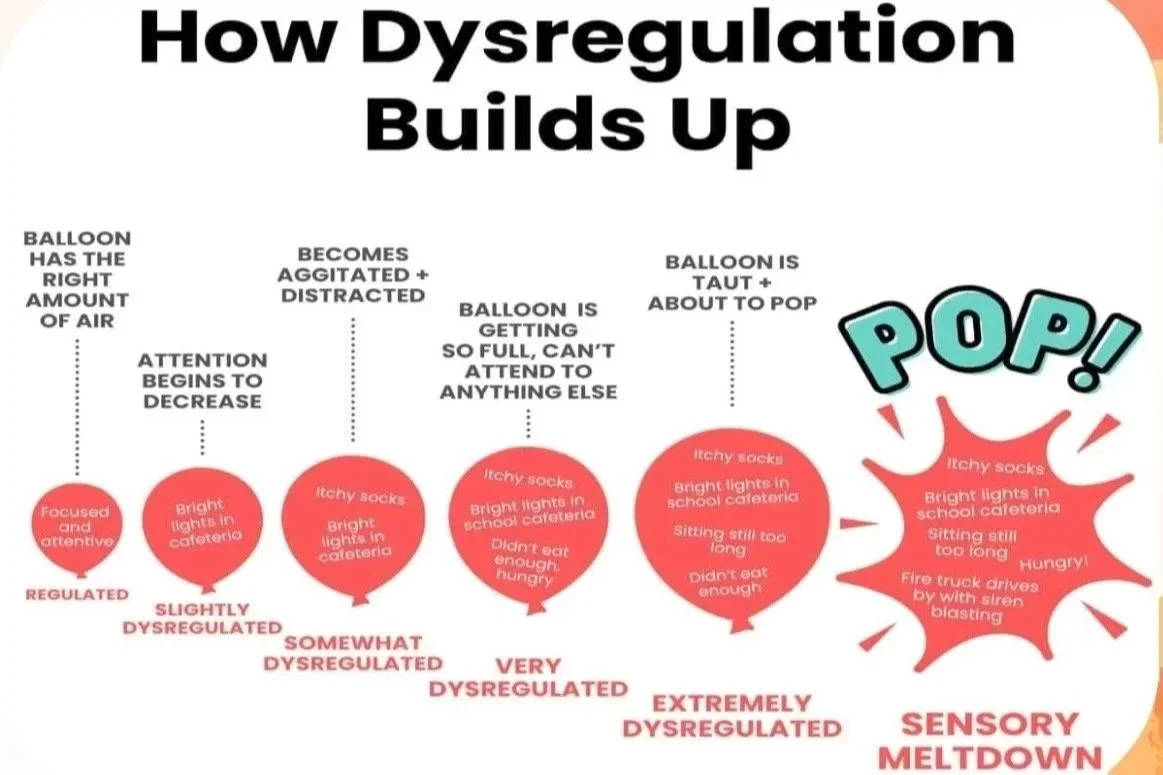
Ideally, you catch it before it peaks. I have my own four-year-old, and I know his sensory needs. So when we had to go to the dentist, I was watching out for it. If I see him getting antsy and crashing into things, my main thing becomes: how do I get the air out of his growing balloon before it pops?
I'm going to hold him and squeeze. Give him a nice big hug, with a downward motion. And I'm not going to say anything. Auditory input will only add to the stimulation. That's the hardest part for me, honestly. I have to remind myself to be quiet.
Nice squeezes. Calm body. Give them the chance to come down as much as possible. They need support, and they need a model. Modeling it is number one.
“Auditory input will only add to the stimulation.”
What do well-meaning parents do that accidentally makes it worse?
We give them too much stimulus, and then we try to calm them down with our words. The TV is on. The lights are on. There's music. We're trying to do too many things at once.
That's one of the hardest things to teach parents, because nobody means any harm. Most parents just aren't aware of their own nervous system, and that's nobody's fault. But it has to be modeled.
What about touch? Is holding them helpful, or can it add to the overload?
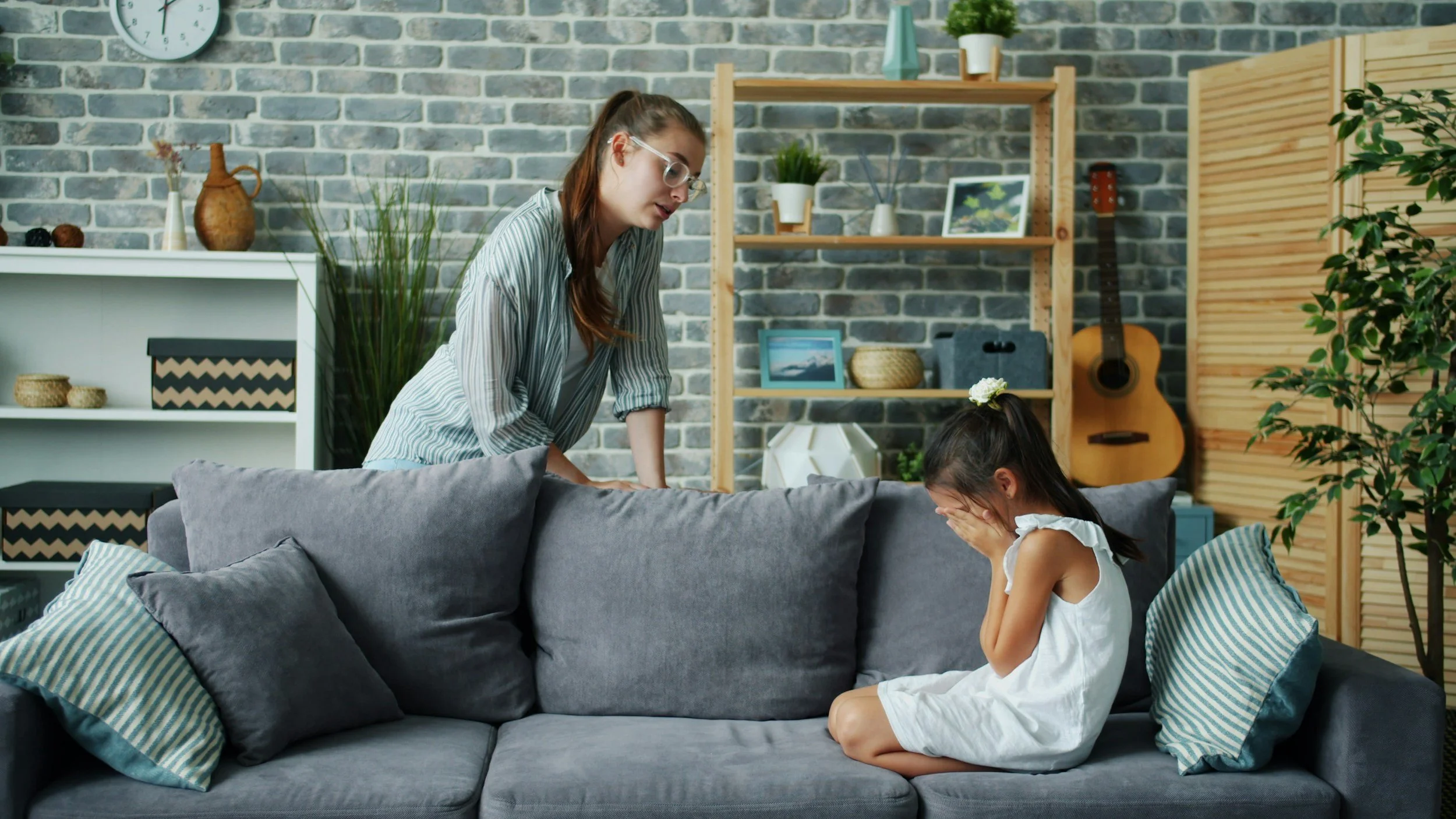
It depends on what you're dealing with. If it's a tantrum or a behavior, like "I didn't get what I wanted" I would leave them alone in a safe space and walk away.
But if all three basic needs are met, then yes, we do want to hold them and give physical input. It doesn't have to be a full hug. It can be: I'm going to sit next to you. I'm going to give you deep pressure squeezes and ride it out with you.
The downward motion is what sends the signal to their brain. You ride it out until it registers. Around five, a child can usually tell you if they don't like it. Four and under, they don't know what they need and the squeezes are how you help their body get the message.
How long should this take to resolve, and when should a parent worry that it isn't?
I wouldn't frame it as something to be resolved. In the Izzi community especially, we're prone to hypervigilance. It's embedded in our DNA and it affects our nervous systems automatically.
What happens is that we learn, as we get older, what our bodies need and how to regulate. That's the goal, it's not a fix, but a skill that develops. Early intervention services with an occupational therapist can be very beneficial to children and families. They can learn skills to support their child with their sensory needs..
What are the most common triggers you see that parents don't think of as triggers?
Irregular sleep. This is a big one. Children who are overstimulated are not getting deep rest.
Too much stimulation at home. The TV is on all the time. Music. Lights are always on.
Clothing. Some children don't like shorts or looser pants. It's the texture, or the tags. A lot of them respond better to leggings. They need that compression.
The parent's own state. Parents often aren't aware of their own stimulation level. When you're more irritable and have less tolerance, that shows up in your parenting. You have to reset your own nervous system too.
Any final words of advice for raising young children?
One thing I tell every parent and every trainee, and I have to remind myself of it too, is that we are truly doing the best we can.
It is very, very difficult to be a parent. Every generation of parents has faced its issues, but the population Izzi serves especially: so many of us are in survival mode. That impacts your nervous system. Things have never been this expensive,families continue to live in fear due to immigration status, and the amount of children who are being diagnosed with special needs continue to increase. There are so many outside factors.
Understand that you're doing the best you can with the circumstances you've been given. Social media makes it so easy to compare the haves and the have-nots. And children really do develop at so many different levels and paces.
Enjoy those first five years. And honestly, seek support if you need it. Therapy and regional services are wonderful.

A huge thank you to Juliana for taking the time and talking about this important topic. To every parent reading this: you’re doing the best you can with what you’ve been given.
Connect with Juliana here!
Email: julilainez89@gmail.com
Instagram: lotuspediatricot